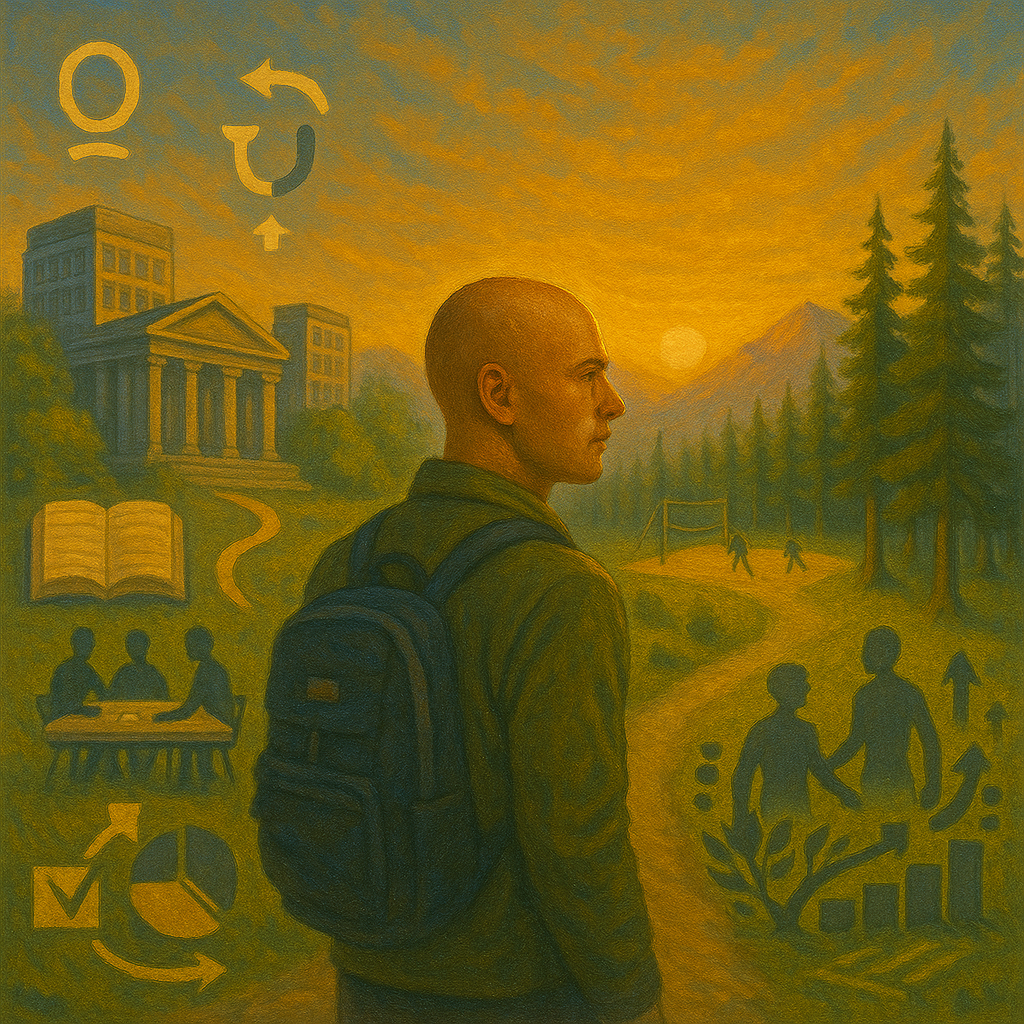
Two years ago, I began a journey that would fundamentally shift how I think, work, and show up in the world. I enrolled in the Organization Development and Knowledge Management (ODKM) master’s program at George Mason University with a desire to deepen my leadership capacity, sharpen my consulting skills, and explore how organizations can learn, grow, and adapt in today’s complex world.
What I didn’t fully expect, but am now deeply grateful for, was how much this program would reshape me. This blog is my way of reflecting on and integrating what I’ve learned. It’s also an invitation to other executive leaders, newly promoted managers, OD practitioners, coaches, consultants, and lifelong learners to join me in exploring how we develop ourselves while helping organizations do the same.
This post marks the beginning. Over time, I’ll unpack the key concepts, frameworks, stories, and tensions that shaped my experience. But today, I want to share the arc of my learning and the growth I’ve experienced personally, professionally, and academically.
Stepping In: From Operations to Inquiry
Coming into the ODKM program, I had already spent years in leadership and operations. I was comfortable managing systems, solving problems, and driving outcomes. But I sensed something was missing. I wanted to develop the “soft skills” that weren’t soft at all, like presence, systems thinking, facilitation, and the capacity to help groups make meaning together. I wanted to learn to lead through complexity, not just efficiency.
Early classes challenged me to shift from problem-solving to inquiry. I learned to slow down, listen beneath the surface, and ask better questions. Instead of assuming I needed to have the answer, I began to see the power in helping a team discover its own wisdom. That insight would come to shape everything, from my coaching conversations to how I approach organizational change.
Learning to See: Systems, Power, and Self
One of the most profound aspects of the program was learning to see differently. We studied systems thinking, group dynamics, and the hidden forces that shape behavior in organizations. I learned to pay attention not just to what was happening, but how and why it was happening.
In one memorable course, I was introduced to Gareth Morgan’s metaphors of organizations. I still remember the moment I saw the “machine” metaphor in my own workplace, how efficiency, predictability, and hierarchy shaped our assumptions about what good leadership looked like. I also saw the limits of that worldview, especially when facing ambiguity or change.
Another powerful concept was “use of self” – the idea that who I am is a core instrument in the work. This invited deep self-reflection. What values am I bringing into the room? What assumptions drive my actions? How do I show up when I don’t have control?
This wasn’t just academic, it was personal. Through the program, I became more aware of my own identity, including how being a male provider shaped my career decisions and sense of worth. In one pivotal reflection, I realized that part of my growth was learning to give myself permission to explore without needing all the answers up front.
Conversations That Matter
Another turning point was my encounter with Conversational Leadership. This idea emphasizes the importance of real, authentic dialogue as a tool for learning and change.
I began experimenting with how I facilitated conversations at work. I swapped out slide decks for open questions. I made space for silence. I noticed how psychological safety (or its absence) shaped people’s willingness to share. And I began to ask: What kind of conversations does this team need right now?
This shift showed up in my consulting work as well. Rather than trying to push change, I started inviting it, helping clients explore their own stories, aspirations, and contradictions. I discovered that transformation often begins not with a new plan, but with a new conversation.
Knowledge as a Living Practice
As the program progressed, I also dove deeply into knowledge management. I had always thought of knowledge as something static like documents, databases, best practices. But I came to see it as something much more dynamic and human.
I studied models like the SECI framework, which highlights how tacit and explicit knowledge interact through socialization, externalization, combination, and internalization. I began applying these ideas at work, by designing tools and sessions that helped staff capture, share, and transfer knowledge, especially in moments of transition.
I led initiatives like expertise transfer interviews, lessons learned systems, and onboarding redesigns. And I used Appreciative Inquiry as a methodology to engage people in defining what works in our culture and how to build on it. Through it all, I realized that knowledge management isn’t just about storage, it’s about flow. It’s about relationships, trust, and meaning making.
Learning to Coach, Coaching to Learn
Midway through the program, I decided to pursue certification as an leadership coach. This decision flowed naturally from my OD studies. Coaching, I realized, was a practice that brought together everything I was learning: systems thinking, presence, dialogue, and use of self.
In our coaching classes, we practiced deep listening, reflective inquiry, and how to sit with uncertainty. I discovered how powerful it is to simply hold space for another person to hear themselves. I also began coaching clients—many of them mid-career professionals wrestling with transitions, just like I was.
What surprised me most was how coaching helped me integrate everything I was learning. It gave me a space to apply my OD lens in real time, and to deepen my own self-awareness. It also planted seeds for what may come next: my own coaching practice, grounded in the values I’ve come to embrace.
What Comes Next
As I reflect on the ODKM program, I feel immense gratitude. The experience has equipped me with frameworks, tools, and language, but more importantly, it has helped me become more whole. I see organizations differently. I see myself differently. And I carry a deeper sense of responsibility for how I show up in the systems I’m part of.
This blog is a continuation of that journey.
In future posts, I’ll be diving deeper into many of the concepts and experiences I touched on here:
- What is leadership and how can I grow this skill within myself?
- What is “use of self” and how does it transform leadership?
- How can we create space for meaningful dialogue at work?
- What does effective knowledge management look like in real life?
- How do Appreciative Inquiry and Theory U create change from the inside out?
- What are the tensions and opportunities in being a coach, leader, and OD practitioner in the same body?
If you’re curious about these questions—or navigating them in your own life, I hope you’ll follow along, engage, and maybe even share your own story.
We don’t grow alone. We grow in community. And this blog is my invitation to be part of one.